


The Life of Chuck is another existential masterpiece
- Denise Breen

- Apr 18
- 3 min read

2sdxzsaxRating: ★★★★☆
Existential movies are like buses. You can wait for ages for one to come along and then, in the space of two days, I see two. Yesterday was "A Matter of Life and Death" and today was "The Life of Chuck".
Mike Flanagan has carved out a niche as the poet laureate of "optimistic grief," and *The Life of Chuck* is perhaps his most ambitious swing at that target yet. Based on the Stephen King novella, the film is a triptych of existentialism that manages to be both a cosmic disaster movie and a quiet, foot-tapping celebration of a single, ordinary life. The film’s greatest strength lies in its unconventional reverse-chronological structure. By starting at the end of the world and working backward to the childhood of Charles "Chuck" Krantz, Flanagan forces the audience to confront a profound question: "What makes a life "grand"
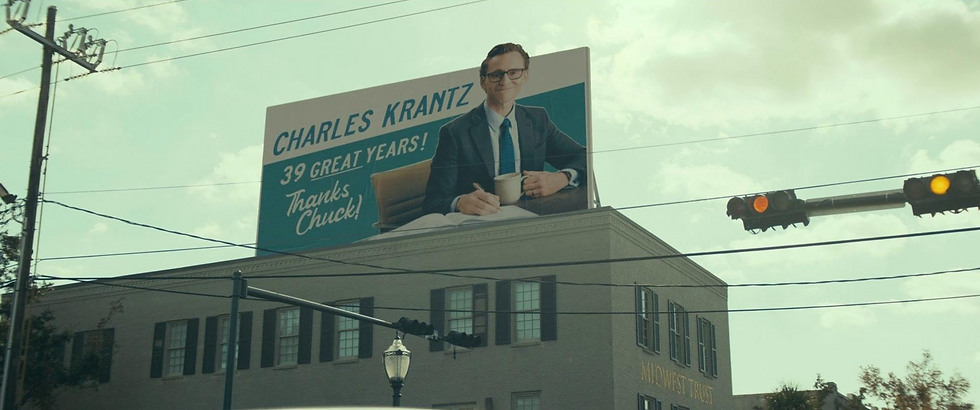
Act III: Thanks, Chuck! The film opens with a surreal, apocalyptic atmosphere as the world literally begins to crumble. It’s a bold, disorienting start that captures the chaotic dread of a world losing its collective memory.
Act II: The Busker’s Beat: The middle segment is the film's beating heart. It features a sequence involving a street drummer and a spontaneous dance that serves as a joyous reminder of the "multitudes" we all contain.

Act I: The Haunted House** – The final act brings us to the beginning, grounding the cosmic stakes in a coming-of-age story about fate and the things we choose to leave behind.
While many know him for his high-energy theatricality, Tom Hiddleston delivers a performance here of remarkable, soulful restraint. As Chuck, he is the eye of the storm. Hiddleston anchors the film not through grand monologues, but through his physicality—most notably in a show-stopping dance sequence that radiates pure, unadulterated presence. He makes Chuck feel like a man you’ve known your whole life, embodying the "everyman" with a grace that makes the film’s metaphysical reaches feel personal.

The film is bolstered by a cast that understands exactly what kind of fable they are in. Chiwetel Ejiofor provides the necessary emotional weight in the opening act. As a man watching the world disappear, his performance is a masterclass in grounded anxiety, acting as our surrogate in a dissolving reality. Karen Gillan, far removed from her Marvel and Doctor Who universes, she delivers a sharp, poignant performance that adds a layer of domestic reality to the surrealist proceedings. Her chemistry with the cast helps bridge the gap between the film’s "end of the world" stakes and its "end of a life" intimacy.

If Tom Hiddleston is the film’s anchor, Mark Hamill is its heart. In Act I (which chronologically serves as the beginning of the story), Hamill delivers a performance that is miles away from the galactic heroism of Luke Skywalker or the manic energy of the Joker. Playing Albie Krantz, Chuck’s grandfather, Hamill is nearly unrecognizable—not through prosthetics, but through a weary, lived-in vulnerability. He portrays a man burdened by a secret in his attic and the weight of his own mortality. Hamill’s Albie is a complex figure—at once a loving guardian and a man struggling with deep-seated depression and "the bottle." His scenes with young Chuck (Benjamin Pajak) provide the film’s most poignant moments, grounding the cosmic "end of the world" stakes in the very real, very human cycle of family and legacy.

A crucial element that binds the three disparate acts together is the narration by Nick Offerman. He brings a specific quality to the prose—a blend of stoic wisdom and dry wit—that prevents the more abstract segments from feeling untethered. By reading Stephen King’s rhythmic, observational text with such grounded sincerity, he reinforces the film’s central theme: that every mundane detail of a life is a part of a grander, cosmic architecture. His delivery of the recurring refrain regarding the "multitudes" contained within Chuck gives the movie its philosophical backbone, making the internal world of the protagonist feel as vast as the stars.
The Life of Chuck is a beautiful, if occasionally sentimental, reminder that when a person dies, an entire universe goes with them. It’s a film that demands you sit with your own mortality and come away smiling. While the reverse structure might test the patience of those looking for a traditional narrative, the payoff—anchored by Hiddleston’s career-best vulnerability—is nothing short of transcendent.


Comments